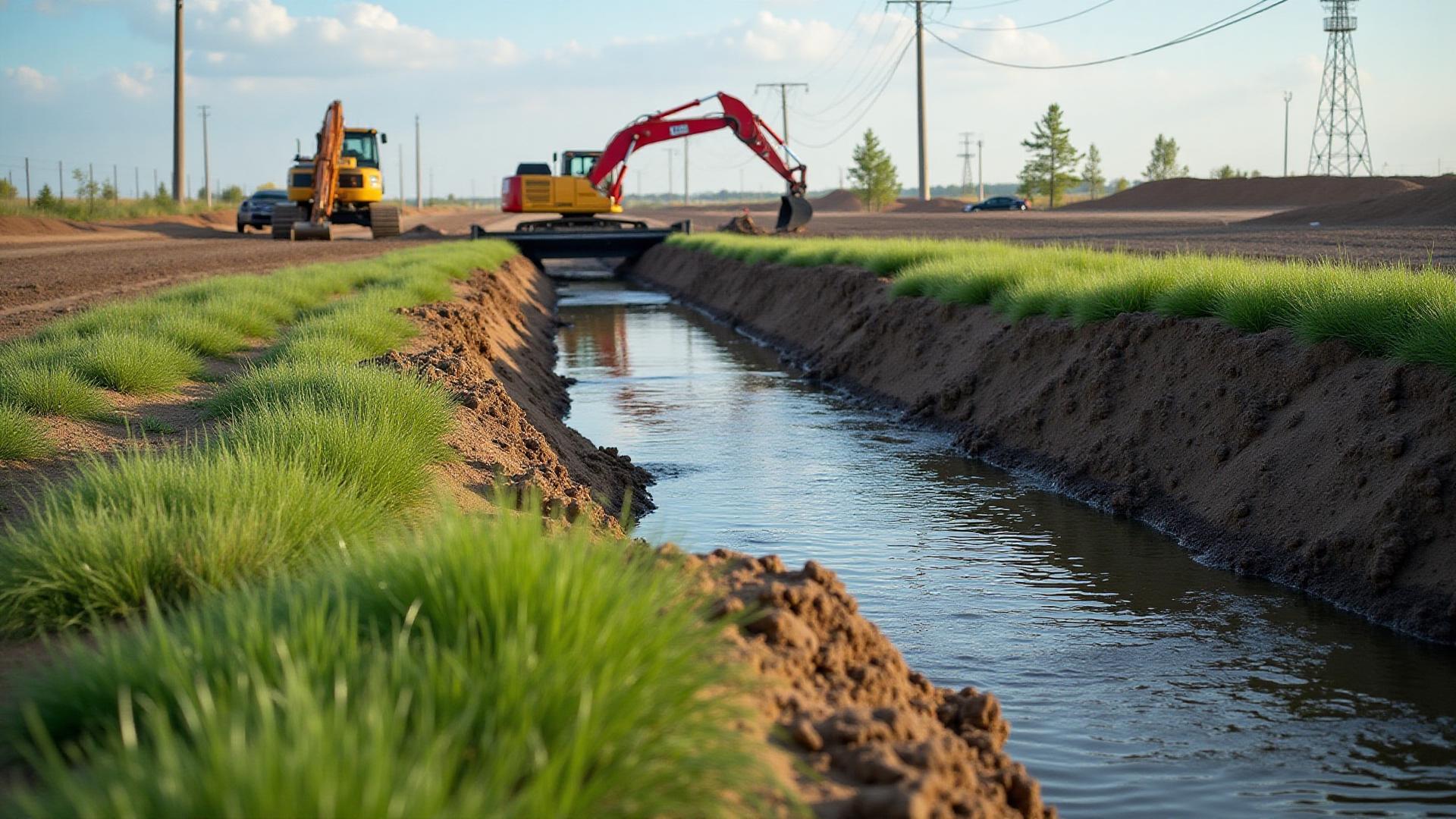
Erosion Control Solutions for Alberta Commercial Properties
🤖 Quick Summary
Commercial erosion control in Alberta requires immediate, cost-effective solutions that comply with provincial regulations. Hydroseeding provides rapid vegetation establishment (7-14 days), reduces sediment runoff by 85-95%, and costs 40-60% less than alternative methods. Critical for construction sites, industrial developments, roadways, and commercial landscaping projects facing Alberta's intense spring runoff and summer storms.
📑 Table of Contents
Historical illustration: the following source amounts are unverified historical examples, not current provider quotes.
Erosion Control Solutions for Alberta Commercial Properties
Erosion represents one of the most significant environmental and financial challenges facing commercial property owners and developers in Alberta. From construction sites to completed developments, the movement of soil can result in regulatory violations, environmental damage, increased maintenance costs, and significant liability. Hydroseeding has emerged as the premier solution for commercial erosion control, offering rapid establishment, cost-effectiveness, and proven results across Alberta's diverse terrain and climate conditions.
Understanding Erosion in the Alberta Context
Alberta's unique environmental conditions create specific erosion challenges that commercial property owners must address proactively.
Climate Factors
Alberta experiences intense spring runoff as snowpack melts, often while the ground remains partially frozen. This combination creates ideal conditions for erosion as water cannot infiltrate frozen soil and instead runs across the surface, carrying valuable topsoil with it. Summer thunderstorms bring sudden, intense rainfall that exceeds soil infiltration capacity, creating additional erosion events. Fall freeze-thaw cycles destabilize slopes and surfaces, while winter wind erosion affects exposed soil areas.
Regulatory Environment
Alberta's environmental regulations require commercial properties to implement effective erosion and sediment control measures. The Environmental Protection and Enhancement Act establishes baseline requirements, while municipal bylaws often impose additional restrictions. Confirm current erosion and sediment control authorizations, approvals and record requirements with the responsible authority for the actual site and activity. Non-compliance results in stop-work orders, fines, and potential legal liability for off-site damage. Understanding and meeting these requirements is not optional – it's a fundamental business necessity.
Economic Impact
The financial consequences of uncontrolled erosion extend far beyond regulatory fines. Topsoil loss requires expensive replacement and site remediation. Sediment entering storm drains creates liability for cleanup and potential damage to municipal infrastructure. Erosion damage to slopes and landscaping necessitates repair and restoration. Perhaps most significantly, visible erosion problems damage property values and corporate reputation. Proactive erosion control through hydroseeding prevents these costs while positioning your property as environmentally responsible.
Why Hydroseeding Excels for Commercial Erosion Control
Commercial properties demand erosion control solutions that deliver results quickly, cost-effectively, and reliably. Hydroseeding meets these requirements in ways that traditional methods cannot match.
Rapid Establishment
Time is money in commercial development. Confirm designed immediate erosion and sediment controls separately; vegetation establishment does not guarantee immediate slope stability or replace required controls. Relative cost, water demand and performance require evidence for the same actual scope, species, site and care; no universal percentage improvement is established by this page. This rapid establishment reduces exposure to erosion events and allows projects to move forward on schedule.
Slope Stabilization
Many commercial properties include challenging slopes where traditional planting methods struggle or fail entirely. Assess slope, runoff and soil with the responsible qualified adviser, then confirm the specified products and any engineered controls; no universal safe slope limit is established here. The fiber mulch component absorbs and retains moisture on slopes where water typically runs off, creating a microenvironment favorable for germination even in difficult locations. The resulting root system penetrates deep into the soil, creating long-term stability that far exceeds surface treatments.
Uniform Coverage
Commercial properties often include large areas requiring erosion control – think of detention basins, large slopes, or post-construction stabilization. Specify application records, protection, inspections and repair responsibilities; actual coverage and performance require verification. Specify application records, protection, inspections and repair responsibilities; actual coverage and performance require verification.
Customized Solutions
Every commercial property presents unique challenges. Hydroseeding accommodates these variables through customized seed blends, application rates, and additives tailored to your specific situation. A detention basin receives a different seed mix than a parking lot slope. North-facing slopes get shade-tolerant species while southern exposures receive heat and drought-tolerant varieties. This customization ensures optimal results for each area of your property.
Applications Across Commercial Property Types
Different commercial property types face distinct erosion control challenges that hydroseeding addresses effectively.
Construction Sites
Active construction sites represent one of the most challenging erosion control scenarios. Soil is disturbed and exposed over large areas. Equipment traffic compacts some areas while leaving others loose and vulnerable. Construction schedules create pressure to minimize time between disturbance and stabilization. Hydroseeding addresses these challenges by providing rapid stabilization of disturbed areas as sections of the site are completed. Temporary hydroseeding with fast-germinating annual ryegrass protects areas awaiting further development, preventing erosion without interfering with future construction. Final hydroseeding with permanent grass species creates lasting stabilization as construction concludes.
Industrial Facilities
Industrial properties often include operational areas that cannot support regular landscaping but require erosion control. Berms around storage areas, facility perimeters, drainage corridors, and similar spaces benefit from hydroseeding with low-maintenance, deep-rooted grass species that provide erosion control without requiring intensive management. These areas can be hydroseeded with native grasses and drought-tolerant species that essentially become self-sustaining after establishment, reducing long-term maintenance costs while providing effective erosion control.
Commercial Developments
Retail centers, office parks, and mixed-use developments balance aesthetic requirements with practical erosion control needs. Hydroseeding provides both, creating attractive green spaces that also protect soil resources. Detention basins, a required feature of most commercial developments, particularly benefit from hydroseeding. These areas experience periodic inundation and must resist the erosive force of flowing water while presenting an attractive appearance during dry periods. Hydroseeding with water-tolerant grass species creates durable, attractive detention basin vegetation at a fraction of the cost of alternative approaches.
Roadways and Parking Areas
Commercial properties include extensive hardscape areas where erosion control focuses on slopes, berms, and transition zones. The areas adjacent to parking lots and roadways face particular challenges – salt exposure in winter, heat reflection in summer, compacted soil, and limited maintenance opportunities. Hydroseeding with specially selected grass varieties adapted to these tough conditions provides effective erosion control and an attractive appearance that enhances property value.
The Commercial Hydroseeding Process
Understanding the process helps commercial property owners and managers set realistic expectations and plan accordingly.
Site Assessment
Professional hydroseeding begins with thorough site assessment. Experienced technicians evaluate soil conditions, slope characteristics, drainage patterns, sun exposure, and site-specific challenges. This assessment informs the development of a customized hydroseeding plan tailored to your property's unique requirements. For commercial properties, this assessment also considers operational requirements, maintenance capabilities, and aesthetic goals.
Preparation Requirements
Successful hydroseeding requires adequate site preparation. The extent of preparation varies with site conditions, but typically includes removing debris and obstacles, establishing proper grades and drainage patterns, loosening compacted soil in planting areas, and amending soil as necessary based on test results. While this preparation represents an additional cost, it's essential for achieving results that justify the investment. Attempting to hydroseed poorly prepared sites leads to disappointing results and wasted resources.
Custom Blend Development
Commercial hydroseeding success depends on using the right seed blend for each specific application. Professional providers develop custom blends considering Alberta climate conditions, specific site characteristics, maintenance expectations and capabilities, and intended use of the area. A typical commercial blend might include Kentucky bluegrass for durability and recuperative ability, perennial ryegrass for quick establishment and wear tolerance, fine fescues for shade tolerance and low maintenance requirements, and native grasses for naturalized areas and low-maintenance applications.
Application
Professional application ensures uniform coverage and proper application rates. Commercial hydroseeding equipment includes truck-mounted units for large areas and remote locations, trailer-mounted units for moderate-sized projects, and hand-applied systems for small areas or locations with access limitations. Application rates typically range from 40-100 pounds of seed per acre, depending on the specific situation and desired establishment speed.
Post-Application Management
Successful establishment requires appropriate post-application care. The first 30 days are critical. Watering must maintain consistent surface moisture during germination, typically requiring daily irrigation unless natural precipitation is adequate. Traffic must be restricted from hydroseeded areas until grass reaches mowing height. The first mowing should occur when grass reaches 3.5-4 inches, removing no more than one-third of the blade length. After establishment, transition to regular maintenance appropriate for the specific grass species and location.
Regulatory Compliance and Documentation
Commercial properties must maintain documentation demonstrating erosion control compliance.
Required Plans and Permits
Confirm current erosion and sediment control authorizations, approvals and record requirements with the responsible authority for the actual site and activity. This plan identifies potential erosion issues, specifies control measures including hydroseeding applications, and establishes monitoring and maintenance protocols. Documentation of hydroseeding applications, including dates, seed mixes, and coverage areas, should be maintained as part of compliance records. Regular inspections verify that erosion control measures remain effective throughout the construction and establishment period.
Regulatory Inspections
Municipal and provincial inspectors may visit your property to verify erosion control compliance. Proper documentation of your hydroseeding applications and maintenance activities demonstrates good-faith compliance efforts. Professional hydroseeding providers can assist with documentation requirements, ensuring you have the records necessary to demonstrate compliance if questions arise.
Cost Considerations for Commercial Properties
Understanding the economics of commercial erosion control helps property owners make informed decisions.
Initial Investment
Commercial hydroseeding costs typically range from $0.10-$0.30 per square foot, depending on site conditions, access, and specific requirements. Large projects benefit from economies of scale, with per-unit costs decreasing as project size increases. This initial investment must be weighed against the costs of non-compliance, erosion damage, and alternative erosion control methods.
Cost Comparison with Alternatives
Sod installation costs $0.40-$0. Relative cost, water demand and performance require evidence for the same actual scope, species, site and care; no universal percentage improvement is established by this page. Erosion control blankets alone cost $0.15-$0.40 per square foot and require vegetation planting for long-term effectiveness. Hydroseeding frequently incorporates erosion control blankets for steep slopes or critical areas, providing a comprehensive solution at competitive pricing. Traditional broadcast seeding costs less initially but typically requires higher seed rates and often needs reseeding, ultimately costing more than professional hydroseeding.
Long-Term Value
The true cost of erosion control must be evaluated over time. Professional hydroseeding establishes uniformly, reducing the need for remediation and overseeding. The robust root systems developed through proper hydroseeding create lasting stability, preventing erosion damage that would require expensive repair. Compliance with environmental regulations avoids fines and legal complications that can far exceed erosion control costs. Enhanced property aesthetics improve property values and tenant attraction. Reduced maintenance requirements lower long-term operating costs.
Seasonal Considerations for Commercial Properties
Commercial projects proceed year-round, but erosion control effectiveness varies with seasons.
Spring Applications
Spring represents the ideal season for hydroseeding in Alberta. Warming soil temperatures, increased moisture, and lengthening days create optimal conditions for rapid germination and establishment. Commercial projects scheduled for spring completion should include hydroseeding as weather permits, typically from late April through May depending on location. Early application takes full advantage of growing season length, allowing grass to develop deep roots before summer heat and drought stress.
Summer Applications
Summer hydroseeding in Alberta is viable but requires more intensive management. Higher temperatures and lower relative humidity increase water requirements during establishment. Irrigation must be more frequent and carefully monitored to prevent surface drying. Seed selection should emphasize heat and drought-tolerant species. Application timing should avoid the hottest part of summer if possible, with late July and August preferred over June and early July. Despite these challenges, summer hydroseeding successfully establishes erosion control when projects cannot wait for fall.
Fall Applications
Fall hydroseeding, typically September through early October, offers excellent results. Warm soil combined with cooler air temperatures and increasing moisture creates favorable germination conditions. Reduced weed competition allows grass to establish with less interference. Grass developing in fall allocates more resources to root growth, creating robust root systems that support vigorous growth the following spring. The primary limitation is the shortened establishment period before winter, requiring applications early enough for grass to reach adequate size before hard freezes.
Winter Dormant Seeding
Dormant seeding involves applying hydroseed in late fall or winter when soil temperatures prevent germination. Seeds remain dormant through winter and germinate with spring warming. This technique extends the application window and positions seed for immediate germination when conditions become favorable. Success requires proper timing – applications must occur after soil temperatures drop below germination threshold but before extensive snow cover. The mulch layer protects seeds through winter while the freeze-thaw cycle enhances seed-soil contact.
Case Studies: Commercial Success Stories
The following are hypothetical planning illustrations retained from the original source. No underlying project records or measured results have been verified; they are not HAUSE jobs or customer evidence.
Industrial Park Development, Red Deer
Illustrative Red Deer industrial scenario: a 15-acre development includes 8 acres of slopes and detention basins. Record grading, water flow, immediate controls and the vegetation specification, then compare full quotes and establishment responsibilities. The original three-week growth and 60%-of-sod outcomes were unverified and are not presented as results.
Shopping Center Expansion, Calgary
Illustrative Calgary shopping-centre scenario: grading exposes slopes near storm drains. Confirm the approved erosion and sediment control approach, any specified blankets or matrices, inspection and repair duties, and vegetation establishment records. No successful rainfall performance or inspector commendation has been verified.
Highway Construction Corridor, Highway 2
A highway construction project required stabilization of extensive disturbed areas adjacent to the traveled lanes. Over 30 acres required erosion control that could withstand roadside conditions including salt exposure, exhaust, and heat reflection. A custom seed blend emphasizing salt-tolerant and heat-resistant species was developed. Application occurred in sections as construction progressed, minimizing the duration areas remained exposed. The resulting grass coverage prevented erosion while requiring minimal maintenance, reducing long-term costs for the property owner.
Conclusion: Protecting Your Commercial Investment
Erosion control represents a critical but often underestimated aspect of commercial property development and management. The costs of inadequate erosion control – regulatory fines, environmental damage, property damage, and liability – far exceed the investment in effective solutions. Hydroseeding has proven itself as the premier erosion control method for Alberta commercial properties, offering rapid establishment, cost-effectiveness, and reliable results across diverse applications and conditions.
For commercial property owners, developers, and managers, hydroseeding represents not just compliance with regulations, but a smart investment in property protection and enhancement. Confirm designed immediate erosion and sediment controls separately; vegetation establishment does not guarantee immediate slope stability or replace required controls. As environmental awareness and regulatory scrutiny continue to increase, properties with demonstrated effective erosion control stand apart in the marketplace.
Whether you're developing a new commercial property, managing existing facilities, or completing construction projects, professional hydroseeding deserves consideration as your primary erosion control solution. The investment in proper erosion control protects your property, ensures regulatory compliance, and contributes to environmental stewardship – goals that benefit everyone involved in commercial property development and management across Alberta.
❓ Frequently Asked Questions
What are Alberta's erosion control requirements for commercial sites?
Historical illustration: the following source amounts are unverified historical examples, not current provider quotes. Alberta Environment and Parks requires erosion and sediment control plans for most development projects. Sites must prevent sediment from leaving the property, protect water quality in nearby waterways, and implement vegetative stabilization within specific timeframes after disturbance. Non-compliance can result in stop-work orders and fines up to $500,000.
How quickly does hydroseeding control erosion?
Confirm designed immediate erosion and sediment controls separately; vegetation establishment does not guarantee immediate slope stability or replace required controls. Relative cost, water demand and performance require evidence for the same actual scope, species, site and care; no universal percentage improvement is established by this page.
What is the cost of commercial hydroseeding in Alberta?
Historical illustration: the following source amounts are unverified historical examples, not current provider quotes. Commercial hydroseeding typically costs $0.08-$0.25 per square foot depending on site accessibility, slope steepness, and project size. Large projects (over 50,000 sq ft) benefit from significant volume discounts. This is 40-60% less expensive than sod installation with comparable or superior erosion control performance.
Can hydroseeding work on steep slopes?
Yes, hydroseeding excels on slopes up to 2:1 (50% grade). Bonding agents in the slurry adhere material to steep terrain. For slopes steeper than 3:1, erosion control blankets may be added over hydroseed for additional stability. This makes hydroseeding ideal for berms, ditches, and embankments common on commercial sites.